
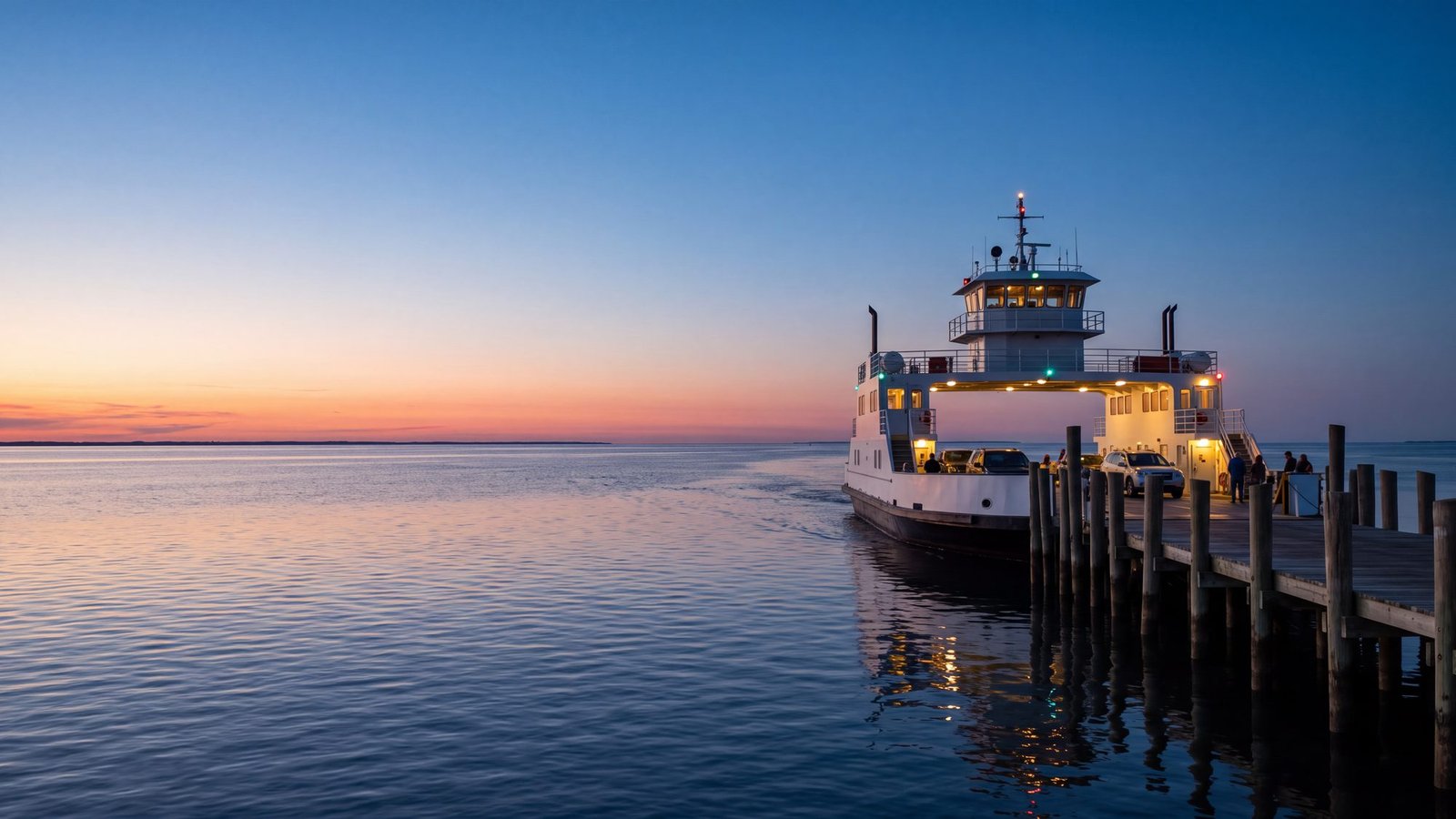
The Outer Banks ferry system was built to solve one practical problem — several of these islands don’t have bridges, and never will — but there’s a better way to think about it. Treat the ferries as transportation only and you miss what they actually are: the cheapest boat tours in North Carolina. The Hatteras–Ocracoke run alone is a 70-minute crossing of Pamlico Sound (free through 2026), open water the whole way, with dolphins common enough that regular riders eventually stop pointing them out. Compare that to what a dedicated dolphin cruise charges on the mainland.
This guide breaks down what each of the four vehicle routes plus the passenger-only Ocracoke Express actually costs and takes, how the reservation system works and where it doesn’t apply, and three specific trips worth building a day — or a whole loop — around. Nothing here requires a car either — three of the four routes carry walk-on passengers, and one is passenger-only by design. If you haven’t nailed down how you’re actually getting to the Outer Banks, sort that out first — the ferries only matter once you’re already on this side of the sound.
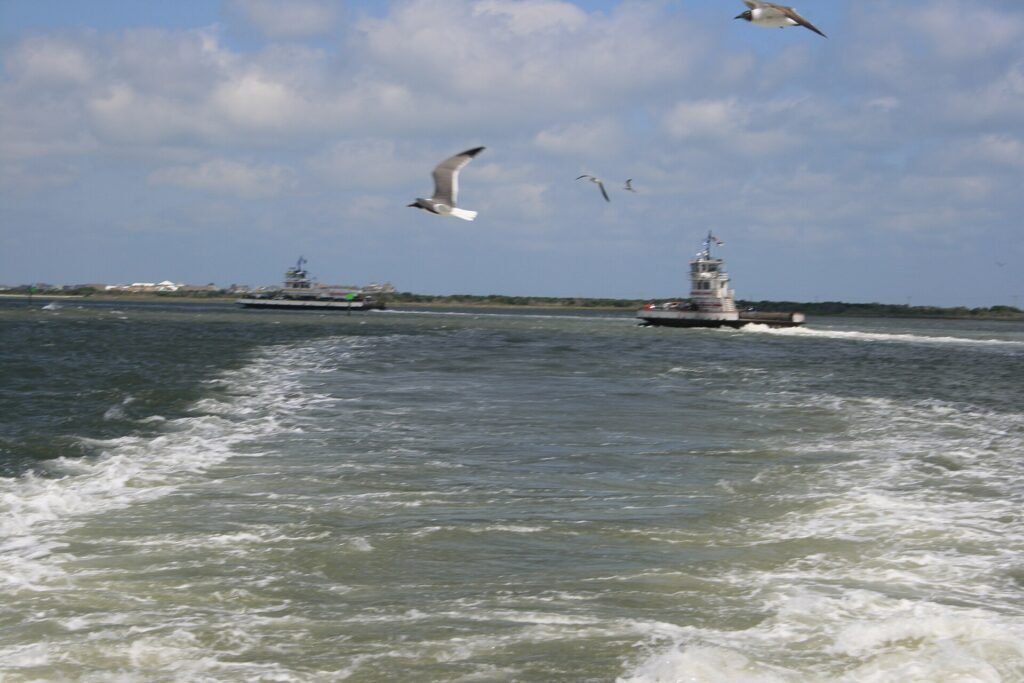
The four routes that matter to an OBX trip
Hatteras–Ocracoke
About 70 minutes
First come, first served — no reservations
Lands at the South Dock, Ocracoke’s north tip
Tolls start January 1, 2027
Toll routeOcracoke–Cedar Island
About 2 hr 15 min
$15 / $30 / $45 by vehicle length, each way
Reserve up to 90 days out
Lands at Silver Lake, in the village
Toll routeOcracoke–Swan Quarter
About 2 hr 40 min — longest in the system
Same fares as Cedar Island
Reserve up to 90 days out
Lands at Silver Lake, in the village
Free through 2026Currituck–Knotts Island
About 30 minutes
First come, first served
Currituck Sound, mainland side
Tolls start January 1, 2027
Passenger onlyOcracoke Express
About 70 minutes, Hatteras to Silver Lake
$15 round trip
May 5 to September 7 in 2026, no Sundays
Reservations recommended
Hatteras–Ocracoke (free through 2026)
This is the ferry most visitors take, since it’s the only link between Hatteras Island and Ocracoke Island. The crossing takes about 70 minutes across Pamlico Sound, it is free through the end of 2026 — under the 2026 state budget, tolls begin on this route January 1, 2027 — and there is no reservation system for it — none, despite what you might read claiming otherwise. The rates are being decided this fall — the dates are in the box below. It runs first come, first served, roughly hourly from early morning until midnight, with extra departures added during the peak summer months to handle demand. The 2026 summer timetable — two dozen-plus sailings a day each way, first boat 5 am out of Hatteras and 4 am out of Ocracoke, last boat midnight from both sides — runs through October 19, then thins out for the winter.
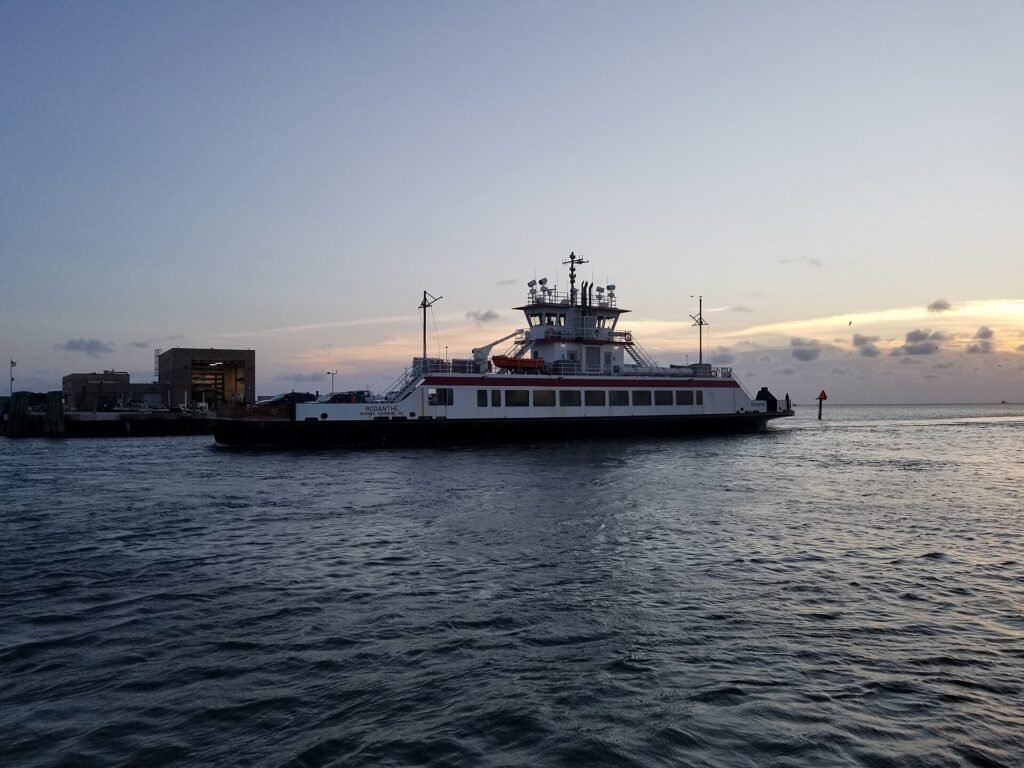
Lines build worst in the middle of the day in season, so an early-morning or evening crossing moves noticeably faster — the sunset run in particular is the move regulars make, both for the shorter wait and the light on the water. Residents and commercial traffic carrying priority passes load first, which can push a standby line back further than the length of it suggests. Weekday mornings in shoulder season are close to a guarantee of a quick load; weekend afternoons in July are the opposite end of that spectrum, so build slack into any tight schedule around this crossing.
For what’s waiting once you’re back on the Hatteras side, see our Hatteras Island guide, and if you’re planning a late or early crossing, it’s worth a look at our tide site’s sound conditions first — wind running against the tide can chop up Pamlico Sound faster than the forecast suggests. For a season-by-season timing plan, the return-trip line, and the live dock cameras, see our sister guide to the Hatteras–Ocracoke ferry schedule and wait times.
Tolls are coming to the free ferry — the dates
The law already sets a $150 annual commuter pass for permanent residents of the 20 coastal counties and active-duty military, and exempts school buses and travel during declared emergencies. Details and the comment form are on NCDOT’s ferry tolling page. The adopted rates will be posted here once the Board votes.
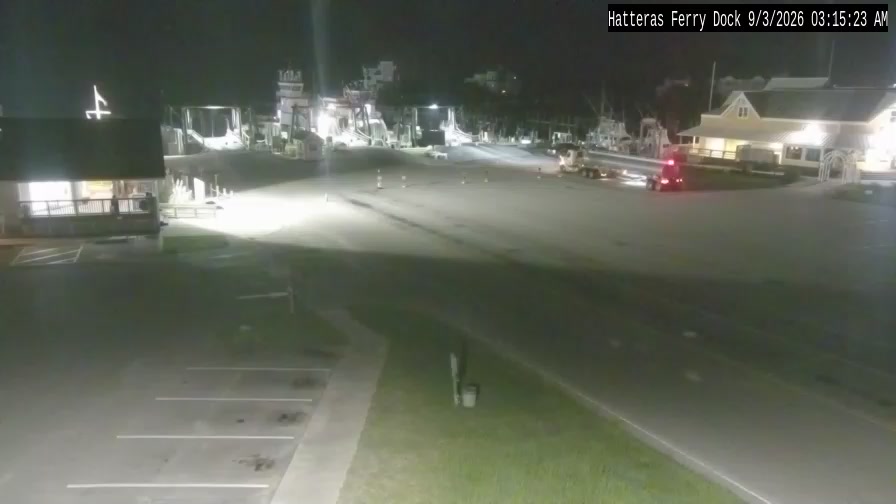
Check the line before you drive: these are NCDOT’s own dock cameras, refreshing every 30 seconds — the Hatteras terminal on the left, the Ocracoke side on the right. Source: NCDOT’s ferry cameras page.
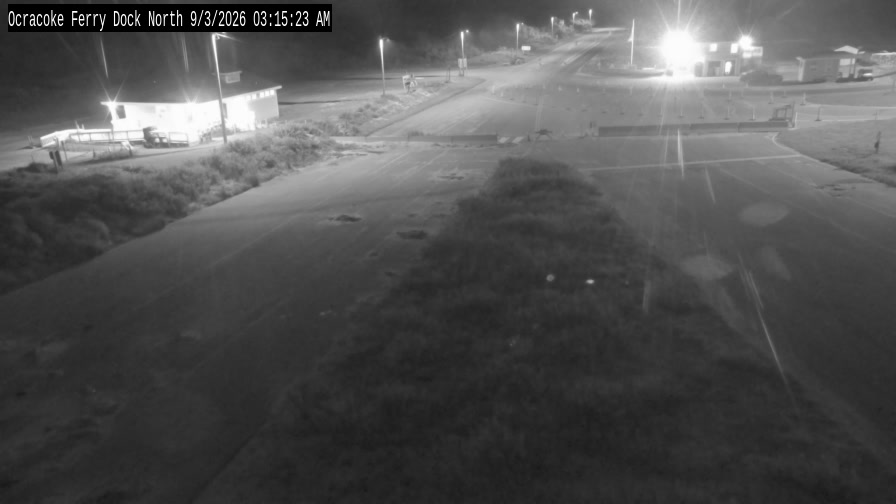
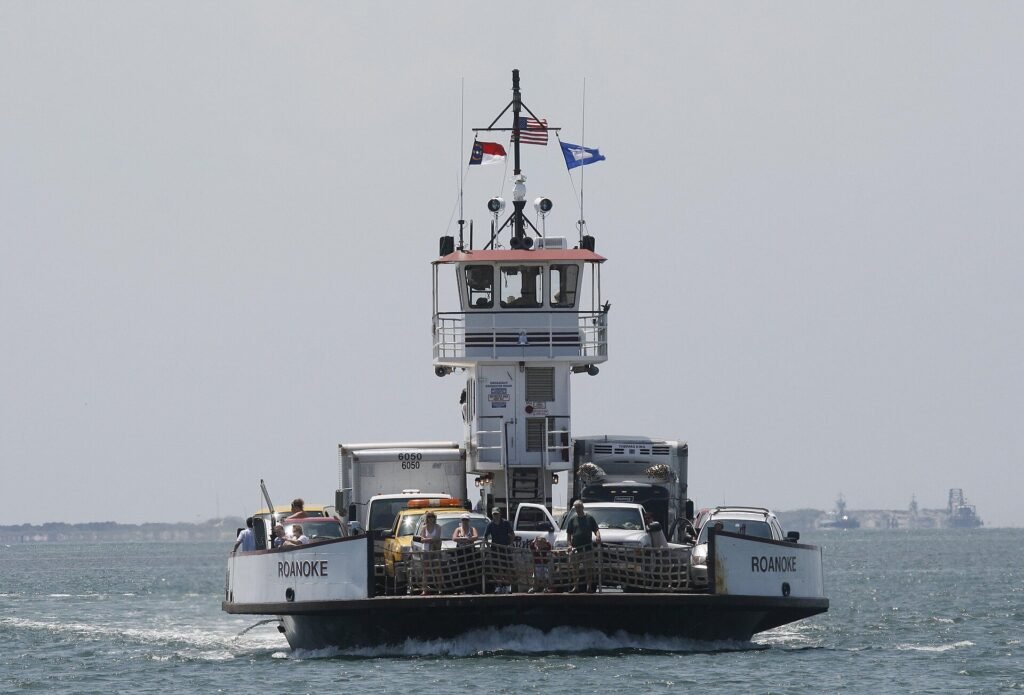
Wondering which boat you will actually get? The line decides for you, but we put together a page on the boats of the Hatteras–Ocracoke ferry — every vessel in the pool, what each one carries, and where the names come from.
Ocracoke–Cedar Island (toll)
At about 2 hours and 15 minutes, this toll route across Pamlico Sound is the main connection between Ocracoke and the mainland for anyone not backtracking through Hatteras. A standard vehicle under 20 feet runs $15 one way, motorcycles run less at $10, and a walk-on passenger costs about $1 — NCDOT publishes the full fare table by vehicle length, and it’s worth a quick check since tolls do get revised.
This is the busiest of the toll routes — four sailings a day each way in summer, three a day from September 8 to the end of the year — and in summer, reservations are all but required; without one, you’re gambling on standby space that may not open up for a sailing or two. Onboard, there’s an upper deck with an air-conditioned lounge and an elevator, plus vending machines and restrooms — no route in the system serves meals, so bring food if the crossing spans lunch or dinner. The open-water middle stretch of the crossing is where most of the wildlife sightings happen, so it’s worth stepping out to the deck rather than staying in the lounge the whole way.
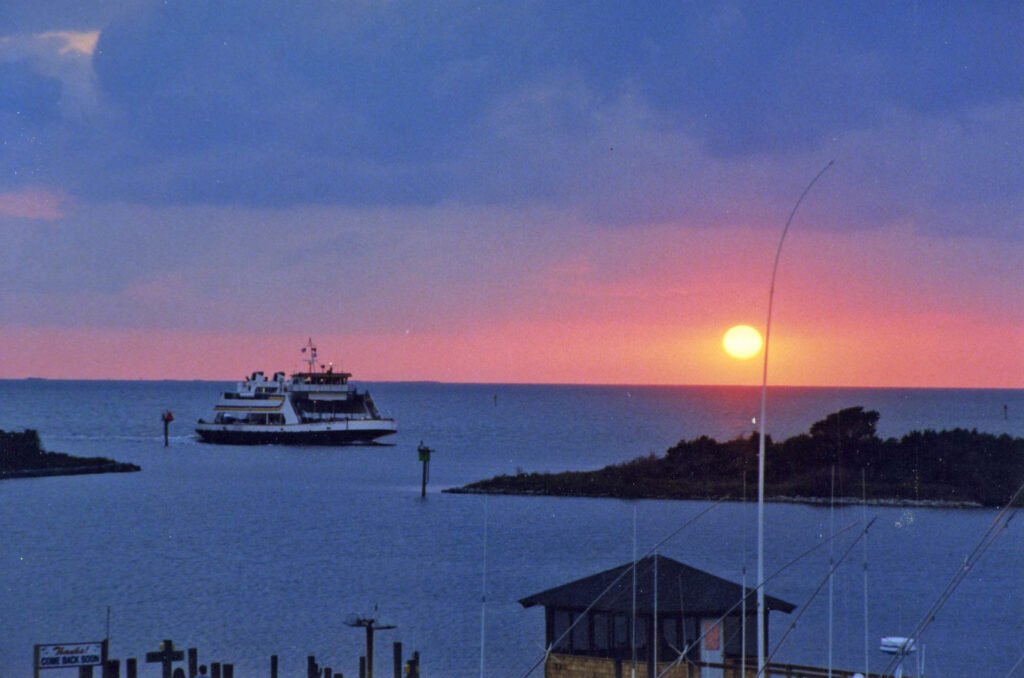
Ocracoke–Swan Quarter (toll)
This is the longest ferry route in the entire North Carolina system, running about 2 hours and 40 minutes, with the same toll structure as the Cedar Island crossing. The bigger practical detail is what’s waiting on the other end: Swan Quarter is genuinely remote, without much in the way of gas stations or food nearby. Fuel up and eat before this crossing, not after — planning to find something at the terminal is how people end up stuck. The upside of the extra length is a quieter crossing than Cedar Island sees even in peak season, since fewer travelers route through Swan Quarter at all.
Currituck–Knotts Island (free through 2026)
This one’s easy to overlook because it’s nowhere near the rest of the Outer Banks — it’s a short hop across Currituck Sound (free through 2026) on the mainland side, about 30 minutes each way, on a small ferry that fills up fast. It was originally put into service to get Knotts Island kids to a mainland school, and it still runs that same route today, sharing the boat with regular travelers. There’s a small country store near the dock that makes sandwiches worth buying before you board — there’s nothing else close by once you’re on the water. Because the route sits well north of the rest of this guide’s territory, it’s realistically its own half-day trip rather than something to combine with an Ocracoke run.
Ocracoke Express (the passenger-only option)
If a vehicle isn’t part of the plan, the Ocracoke Express skips the car line at Hatteras entirely. It’s a seasonal, passenger-only ferry that runs from early May into early September — May 5 to September 7 in 2026 — connecting Hatteras directly to Ocracoke village in about 70 minutes, with room for up to 129 passengers per crossing. The fare is $15 round trip per person, children 3 and under ride free, and a bicycle is $1. There’s no Sunday service, and while it’s walk-on, reservations are encouraged since seats do fill up on weekends.
The move here: bring a bike for getting around the village, or use the free summer tram that meets the passenger ferry and saves the walk into town. On a packed July Saturday, when the vehicle line at Hatteras can run hours long, this is frequently the fastest way to get a person — just not a car — onto the island. It’s worth checking the current schedule before locking in plans, since departure times shift by day of week during the season.
Where each ferry lands on Ocracoke, and what is there when you drive off
Ocracoke has two landings about 13 miles apart, and which one you get depends on the boat, not on you. The Hatteras ferries come into the South Dock on the island’s bare north tip. There is nothing at the landing but the terminal and its restrooms; from the ramp it is a straight run down NC-12 with the ocean on your left and the sound on your right — past the pony pen pull-off, the National Park Service’s Ocracoke Campground about 10 miles in, and the lifeguarded beach — before the road bends into the village at about 13 miles. Fuel, food and the first store are all in the village, so nobody should roll off the ramp on empty.
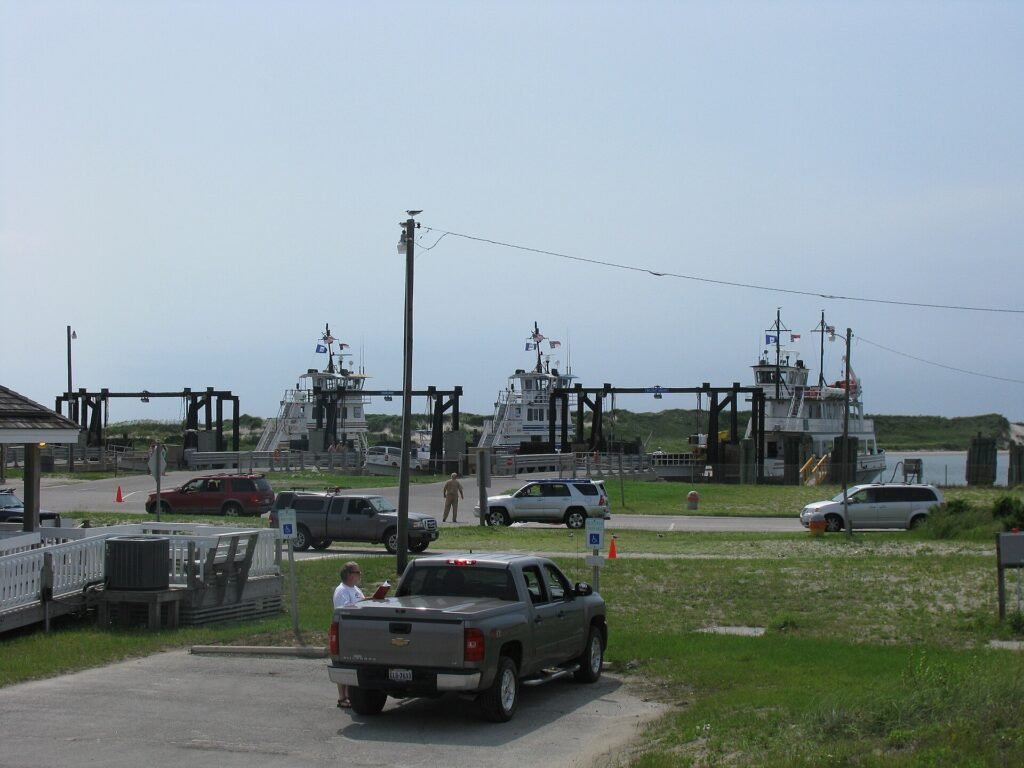
The Cedar Island and Swan Quarter boats, and the Ocracoke Express, land at the other end of the island: Silver Lake, the round harbor at the heart of the village. Step off the mainland ferry and you are already there — the lighthouse, Howard Street and the restaurants are a walk, the free tram meets the passenger ferry in season, and NC-12 runs north from the harbor to the beaches and, eventually, the Hatteras dock. Leaving is the same story in reverse: back to Hatteras from the north tip, back to the mainland from the village. Our Ocracoke Island map has both terminals pinned.
The crossing can be the thing you do rather than the gap between things. Blackbeard’s Gold: The Crossing is a self-guided hunt of ours written to be played from the Hatteras ferry line and the deck — it asks which university’s colors your boat is wearing, and sends you to find her name before you land. It fills the 70 minutes, and it is $29 for the team.
Is there a line at the Hatteras ferry right now?
Look before you drive down. These are NCDOT’s own cameras on the two docks — the queue on the Hatteras side is the one that decides your afternoon in July. There is no live tracker for the boats themselves that we trust; the dock camera is the reliable answer.
Cameras: NCDOT Ferry Division. The pictures refresh on their own about every six minutes; reload the page if one looks stuck. Every other live camera on the Outer Banks is on our webcams page, beach and pier cams included.
How reservations actually work
Reservations apply to three services here: the Ocracoke–Cedar Island and Ocracoke–Swan Quarter vehicle crossings, both sound crossings connecting the island to the mainland, plus the Ocracoke Express passenger ferry. Bookings open up to 90 days ahead, either online through ferry.ncdot.gov or by phone at 1-800-BY-FERRY. The rule that trips people up: you have to claim your reservation at the terminal at least 30 minutes before scheduled departure, or it gets cancelled and the spot is released to standby traffic. The Hatteras–Ocracoke route, by contrast, never takes reservations under any circumstances — it’s first come, first served, full stop, so don’t plan around a booking that doesn’t exist. Outside of those two toll routes, no amount of planning ahead will secure a spot on a specific sailing — the system simply isn’t built that way for Hatteras.
Three ferry trips worth planning around
The Ocracoke day trip (free through 2026)
Park in the Hatteras ferry line first thing in the morning, cross free (through 2026) in about 70 minutes, then drive the 13 miles down NC-12 to Ocracoke village. Spend the day working through the lighthouse, the British Cemetery, and Springer’s Point on foot or by bike, then wind down at the lifeguarded beach before catching a sunset crossing back. Total ferry cost for the entire day: zero. For the full on-island layout, our Ocracoke Island map pins everything mentioned here. Pack layers for the crossing itself; open Pamlico Sound is windier than the village streets you’ll be walking later.
The Grand OBX Loop
Drive the barrier islands north to south, cross from Hatteras to Ocracoke (free through 2026), take the toll ferry on to Cedar Island, then loop back up through the mainland to close the circuit. Two of those crossings are officially designated part of the Outer Banks National Scenic Byway, which makes this one of the only road trips in the country with a two-hour-plus boat ride built into the middle of it rather than around it. If lighthouses fit the plan, our lighthouse map covers the stops along this route. Reserve the Cedar Island leg well in advance if you’re running this loop in summer — it’s the crossing most likely to sell out. Build the loop with a spare afternoon in the schedule, since a missed connection on either ferry leg pushes the rest of the day back by hours, not minutes.
The Knotts Island afternoon (free through 2026)
From the Currituck mainland, take the 30-minute crossing (free through 2026) over to Knotts Island, then spend the afternoon at Mackay Island National Wildlife Refuge, which has marsh trails and steady birding. If it’s the season, stop at Martin Farm & Winery afterward — it’s a working farm first and a winery second, with peach picking and a few tables looking out over the bay. Keep an eye on the clock and ride back before the last departure; there’s no late option waiting for stragglers. The pace here is slower than the rest of this guide by design — it’s the one trip on this list built around a farm and a wildlife refuge rather than a beach.
Practical stuff nobody tells you
Pets are welcome on every route, as long as they’re leashed or secured in your vehicle. Photo ID can be requested and vehicles are subject to screening at some terminals — that’s standard Coast Guard security procedure, not something specific to you. Every terminal and every vessel has restrooms, and vending machines are common across the system, but no route serves actual meals, so plan food for longer crossings accordingly. One detail almost every rider eventually notices: each ferry in the fleet is painted in the colors of a different North Carolina college, which makes for a decent guessing game mid-crossing.
Weather, wind, and channel shoaling all cause delays and outright cancellations, especially on the sound routes — check NCDOT’s ferry status online before driving to a terminal, not after you’re already in line. None of this is meant to make the system sound fragile — the vast majority of crossings run exactly on schedule — but a five-minute check before driving out avoids the handful of days when it does matter.
Taking an RV or trailer on the Ocracoke ferries
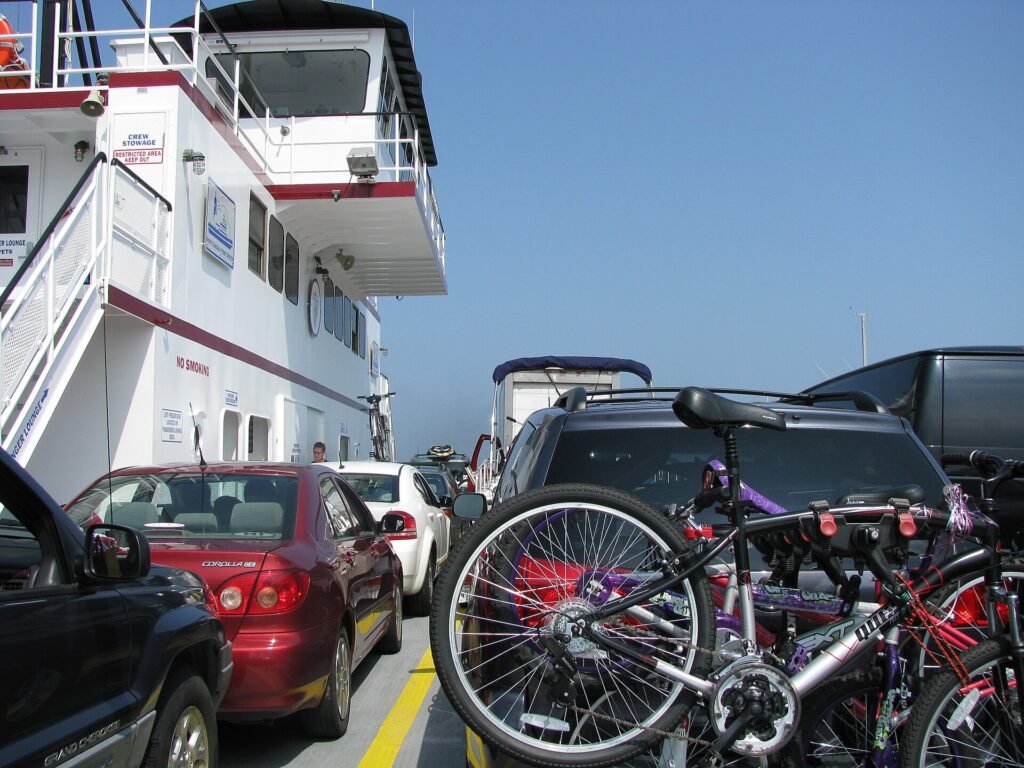
Every boat in the system takes any car, trailer or recreational vehicle that can legally run on the highway — that is NCDOT’s own wording — so the question is never whether you fit, it is what you pay and how long you wait. On the Hatteras–Ocracoke run (free through 2026) there is no length charge at all through 2026, but a big rig takes the deck space of several cars and boards at the loading crew’s discretion, so on a summer afternoon it can sit out a sailing a passenger car would have made. Leaving Hatteras, be in line before 9 am or after 4 pm; leaving Ocracoke, before 2 pm. Nothing on NCDOT’s site spells out a propane rule, but the habit on car ferries everywhere is tanks off before you board, so do it while you wait in line.
| Combined length, bumper to bumper | Cedar Island & Swan Quarter, each way | Hatteras–Ocracoke |
|---|---|---|
| Under 20 feet | $15 | Free through 2026 |
| 20 to 40 feet | $30 | Free through 2026 |
| 40 to 65 feet | $45 | Free through 2026 |
| Over 65 feet | Special permit from the Ferry Division | Special permit from the Ferry Division |
On the toll routes a motorcycle is $10, a bicycle rider $3 and a walk-on passenger $1. NCDOT fare table, checked September 2026.
On the Cedar Island and Swan Quarter boats you pay by total length, bumper to bumper including whatever you are towing — the table above. A 32-foot fifth-wheel behind a 22-foot pickup is a 54-foot combination and pays the top rate; do not round down, because the fare category is set at the dock, not on the form. Anything over 65 feet needs a special permit from the Ferry Division before you plan around it. Reserve the sound routes as early as you can — the window opens 90 days out — and put your true length on the booking, since the deck plan is built from those numbers. Claim the reservation at the terminal at least 30 minutes before departure; changes and refunds need a call to 1-800-BY-FERRY by 4 pm the day before.
Once you are across, the National Park Service’s Ocracoke Campground sits about 10 miles from the Hatteras landing and 3 miles from the village: 136 sites, open year-round, no hookups, cold outdoor showers, generators allowed outside the 10 pm to 6 am quiet hours, $28 a night. Our RV site has the rest — site-by-site rig lengths at Ocracoke Campground and which ferry to take from where you are starting, the RVer’s guide to the three Ocracoke ferries, and a first-timer’s account of getting a rig over.
Outer Banks ferry map: every terminal and route
Use the map below to see all seven terminals at a glance — the four vehicle routes, with Ocracoke appearing twice because the Hatteras boats dock at the island’s north end while the Cedar Island and Swan Quarter boats dock at Silver Lake in the village.
Facts on this page last verified: September 2026.
Each route below lists its crossing time, its cost, and whether you can reserve a spot.
Save this map to your phone for offline use
Locally verified
Reviewed by the Beach4x4 team in Kill Devil Hills, NC
Last checked: September 2026
Sources: the official park, town and county pages for this topic. Always confirm hours, fees, and closures with the official source before you go.
Is the Ocracoke ferry free?
The Hatteras-Ocracoke route is free through the end of 2026. Under the 2026 state budget it becomes a toll route on January 1, 2027, along with Currituck-Knotts Island, Bayview-Aurora and Cherry Branch-Minnesott Beach; the first public comment period closed September 14, 2026, the recommended rates go to the Board of Transportation on October 8, a second comment period on the rate scenarios runs October 9 to 23, and the vote is November 5. The other two routes serving Ocracoke, to Cedar Island and to Swan Quarter, are toll routes, with a standard vehicle running about $15 one way.
Do I need a reservation?
For the two toll routes, Cedar Island and Swan Quarter, and the Ocracoke Express passenger ferry. Book up to 90 days ahead and claim your spot at the terminal at least 30 minutes before departure or it’s cancelled. The Hatteras-Ocracoke route never takes reservations.
How long is the ferry to Ocracoke?
About 70 minutes from Hatteras, roughly 2 hours 15 minutes from Cedar Island, and about 2 hours 40 minutes from Swan Quarter, the longest route in the North Carolina ferry system.
Can I walk on without a vehicle?
Yes. Walk-on passengers pay about $1 on the toll routes and ride free on the free routes. The Ocracoke Express is passenger-only by design, with no vehicles at all.
Are dogs allowed on the ferry?
Yes, on every route, as long as they’re leashed or kept secured in your vehicle for the crossing.